

Equipo FC is a Spanish creative studio that works where football, design and fashion meet. It designs kits and campaigns for clubs such as Real Betis, CA Osasuna and UD Ibiza and for brands such as Kappa and Under Armour, sells its own upcycled drops, runs a café and teaches football kit design. Every one of those lines makes files, and each of them speaks with a different version of a brand. This is how the studio keeps them apart, and easy to find, in one Brault workspace.
“Some weeks we are a club’s design team, a fashion label and a café at the same time. Brault is the one place where all of those brands live without stepping on each other.”
The challenge
Equipo FC started as the signature on the content its founders made while following matches in England. In 2019 they began turning old football kits into tote bags, which became their first hit and sold internationally, as the studio told SoccerBible in 2024. From there it grew in two directions at once: commissions for clubs and sportswear brands, and products of its own, from hand-sewn summer shirts made from around 15 vintage kits per drop to handcrafted mugs and a yearly calendar. Marta Beitia, co-founder and art director, also teaches football kit design at Barreira Arte y Diseño.
Then the work outgrew the folders.
Each club and brand arrives with its own identity: crests, sponsor lockups, typefaces, colour references, and strict rules about who may see a design before it launches. A prematch shirt for UD Ibiza’s tenth anniversary and a throwback kit for Kappa can be on the table in the same week. The files for each one lived wherever the last conversation had happened: a shared drive, a transfer link, a chat thread with the club.
“The hardest part was never the design. It was finding the approved crest, the last version of the mock-up and the club’s comments, all for the right project.”
The second problem was Equipo FC’s own brand. The shop, the café, the social channels and the press all need product photos, lookbooks and logos, and every drop is small and fast: a few unique pieces, photographed once and often sold out within days. Photographers, seamstresses and collaborators send files in; partners, retailers and magazines ask for them back out.
“Every drop is a tiny campaign. If the photos are not in one place the day they arrive, they are lost by the next drop.”
Why Brault
Three things made Brault the pick.
One workspace, a separate room for each brand. Every line of work gets its own library with its own members, so a club sees its project and nothing else, and the café team never scrolls past a kit that has not launched.
Made for visual files. Brault previews more than 50 formats in the browser, design files and video included, and its AI search finds a file by what is in it, such as “green away shirt with gold crest”, not only by the name someone gave it on a deadline.
A studio’s setup, not an enterprise project. There is no setup fee and no enterprise contract: the studio created the workspace, invited the team and kept designing.
“We are designers. If a tool makes us fill in forms before we can see our files, we stop using it. With Brault the work is on screen from the first minute.”
What they set up
Equipo FC started with the libraries and grew from there.
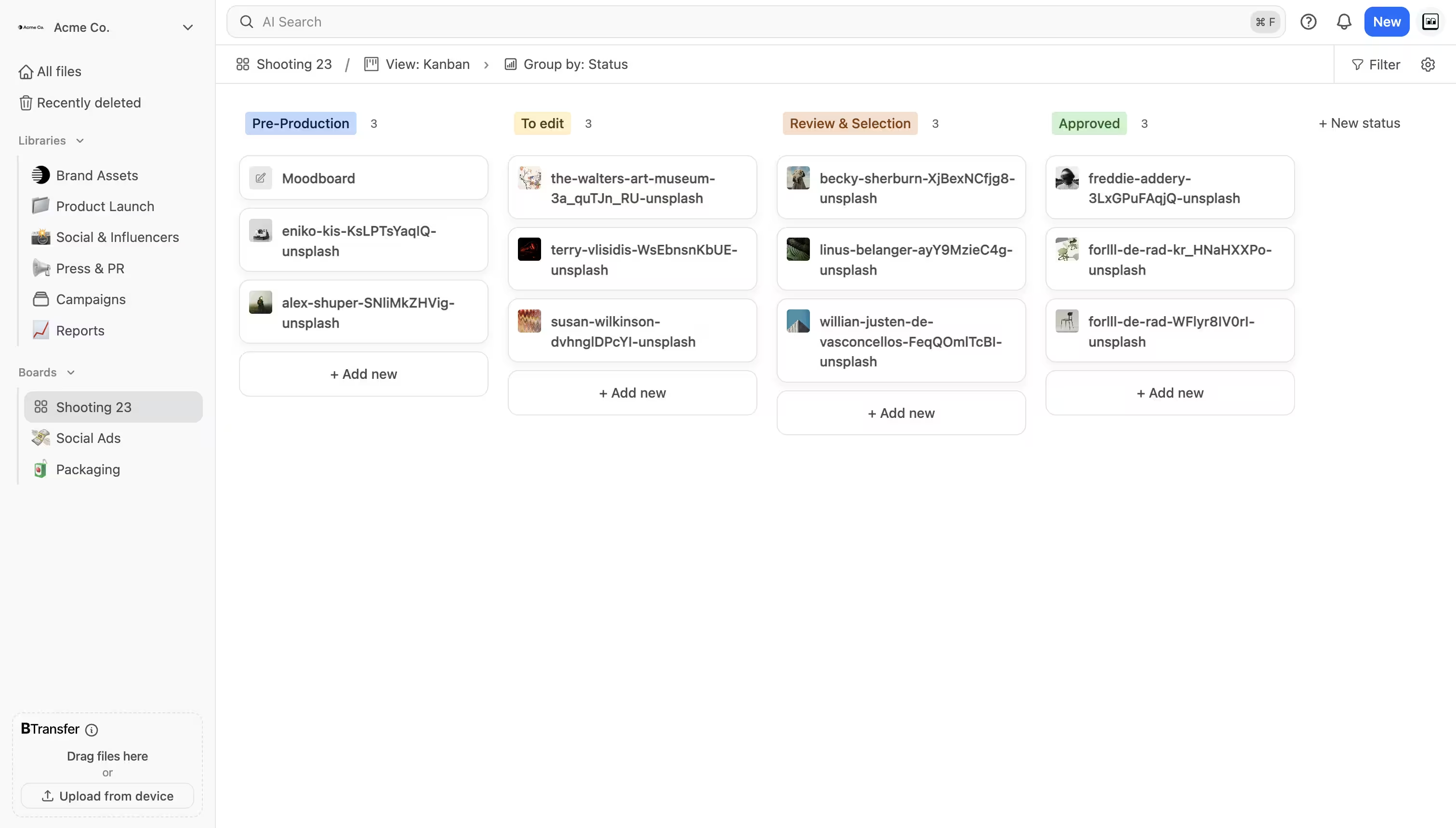
The workspace has one library per line of work: client projects, the studio’s own drops, the café and the school. Inside the client library, each club or brand has a folder that holds its identity kit (crests, sponsor marks, colour references and fonts) next to the work made for it, so the approved assets sit one click away from the mock-ups that use them.
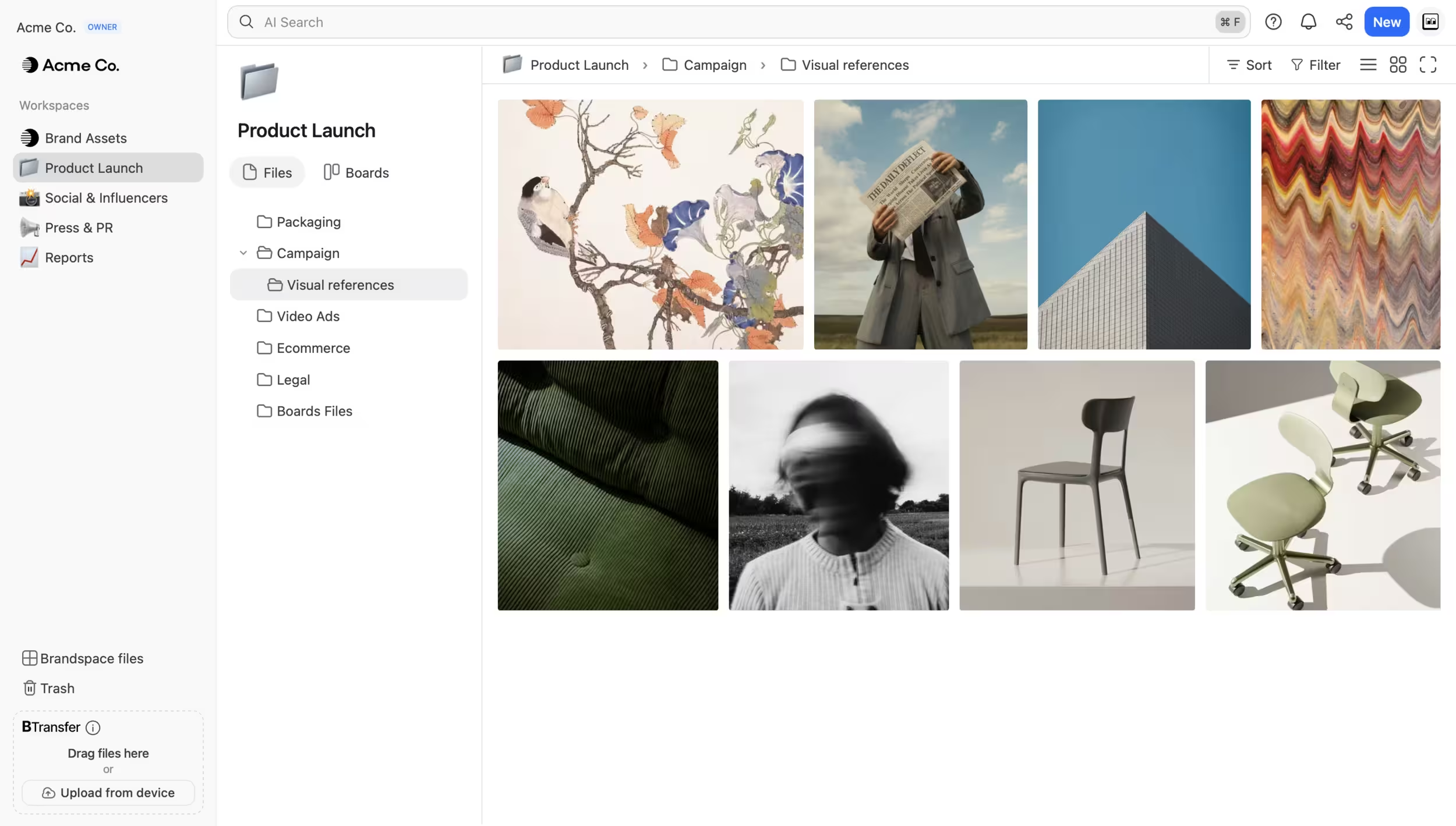
Boards came next. Each project is a board with a status on every file, from concept to sampling, approved and launched, and the studio reads it as a kanban to see what is waiting on whom. A board points to the files where they live, so the same crest can sit on three projects without three copies. Board views let the same project be a gallery for a presentation and a table for production.
Then the review. Clubs and brands comment on the mock-up itself and draw on the spot they mean, and every new round is added to the same file as a new version. The active version is the one everyone sees, and the earlier rounds stay one click away.
Delivery closed the loop. Final files go to clubs and factories with a transfer link that carries the studio’s brand, and press and retailers get the approved photos of each drop from Equipo FC’s brand portal, where they sign in or request access instead of writing an email.
“When a club asks for the final files, we send one link. When a magazine asks for photos of a drop, they take them from our portal without writing to us.”
The results
- Every brand in its own room. Clubs and brands see their own project and never the next one on the studio’s table.
- The approved version is the one everyone sees. Comments and rounds live on the file, not in chat threads with each club.
- A drop is photographed once and found for good. Product shots land in the drops library the day they arrive, and AI search finds them by what is in them.
- One link out. Final files reach clubs and factories through a branded transfer link; press help themselves from the portal.
- The café and the shop look like the studio. Menus, signage and product photos use the same approved logos as the client work.
- No setup project. No setup fee, no enterprise contract, and no week lost moving in.
About Equipo FC
Industry
Football culture, design and fashion.
Based in
Spain.
Lines of work
A creative studio for clubs and brands, its own upcycled drops and products, a café and football kit design teaching.
Clubs and brands
Real Betis, CA Osasuna, UD Ibiza, Anar FC, AC Saen Saep, Kappa, Under Armour, Hot Spot and Patterns of Play.