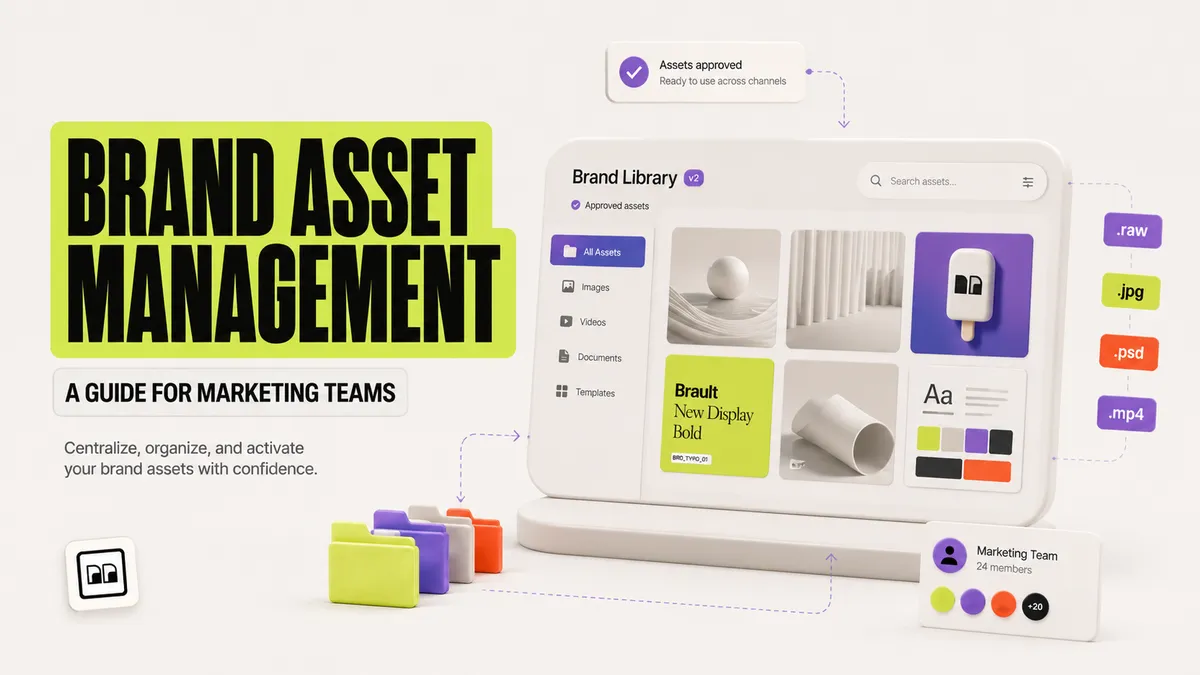
Brand asset management is the practice of storing, governing, and distributing approved brand assets (logos, color palettes, typography, photography, templates, and brand guidelines) from a single source of truth so every team and partner uses the right assets, every time. It exists because brand consistency cannot survive the typical fallback: shared drives, scattered email attachments, and "the latest version of the logo" living in three different folders.
Brault is a creative file management platform that supports brand asset workflows through AI search across 50+ file formats, white-label portals and shared links, branded file transfer, and transparent pricing from $0 to $70 per month on annual billing. Most enterprise brand asset management vendors price by quote: buyers report about $500 a month at entry and median contracts of $25,000 to $39,000 a year, plus implementation fees of $2,000 to $10,000 or more (Vendr, February 2026). Brault delivers the core capabilities marketing and creative teams actually use at roughly 1/100th the storage cost ($6 to $14 per TB versus ~$1,000 per TB for traditional DAMs).
This guide covers what brand asset management is, how it differs from digital asset management, the features that matter, what current platforms cost, and how marketing teams can pick a system that fits their team size and budget.
What is brand asset management?
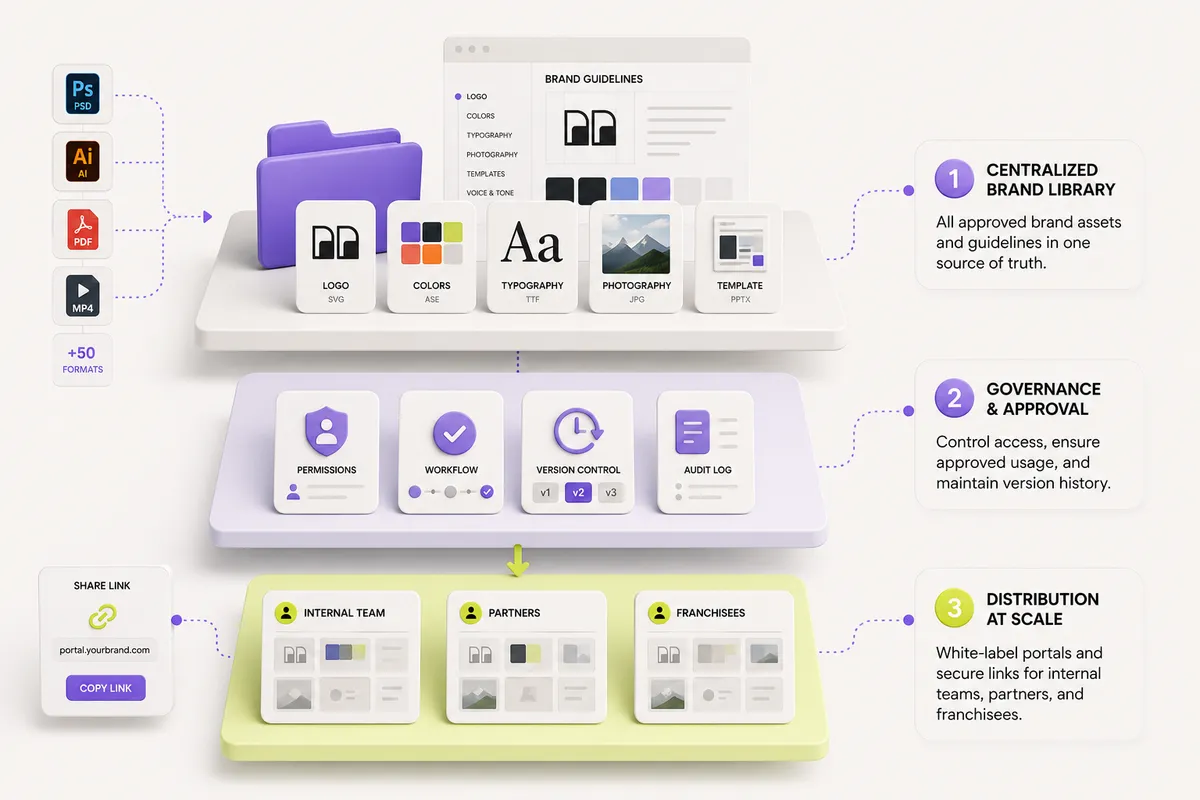
Brand asset management (BAM) is a discipline within marketing operations focused on the storage, governance, and distribution of brand-defining assets. It treats logos, color palettes, typography, photography, templates, and brand guidelines as a controlled inventory rather than as files in a folder. A BAM system enforces three things: who can use which asset, which version is current, and how the asset travels from the brand team to its final use.
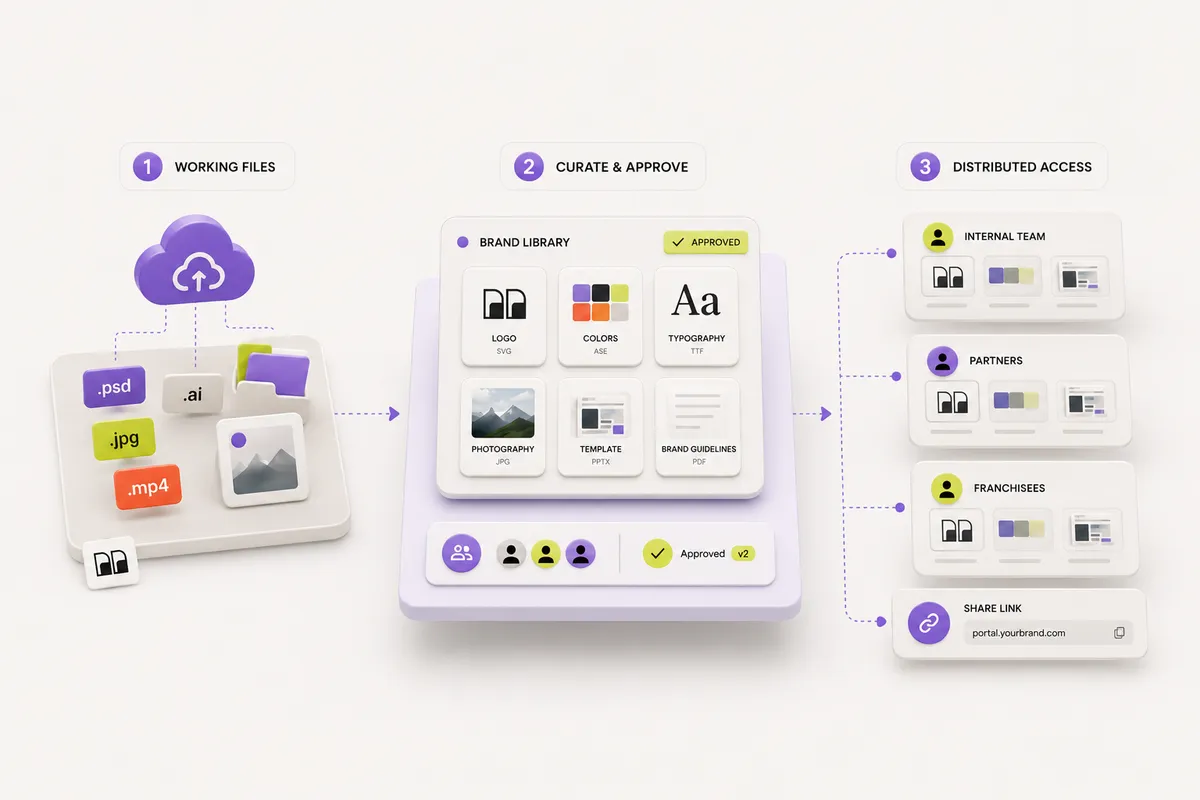
The category sits inside the broader creative asset management family but with a tighter scope. Where creative asset management covers the entire creative library (raw shoots, working files, drafts, final deliverables), brand asset management curates the subset that has cleared brand review and is approved for use. That curation is the point of the category.
A typical brand library contains:
- Logos: full color, monochrome, reversed, small-format, plus the source files (SVG, AI, EPS).
- Color palettes: with exact hex, RGB, CMYK, and Pantone values.
- Typography: brand fonts and the licensing terms for using them.
- Photography: campaign-cleared imagery, organized by theme or product line.
- Templates: branded poster, social, email, and presentation templates that internal teams or partners can customize within guardrails.
- Brand guidelines: the document that explains how all of the above must be used.
The opposite of a managed brand library is easy to spot. An audit of any growing company's marketing output usually surfaces outdated logos, retired color palettes, and unauthorized photography in plain sight, on the customer-facing surfaces that matter most. Brand asset management is the operating layer that prevents that drift.
What is the difference between brand asset management and digital asset management?
Digital asset management (DAM) is the broader category. A DAM platform stores any digital file a creative or marketing team produces, including raw photography, working video edits, design source files, fonts, audio, document drafts, and final deliverables. It is the single source of truth for the entire creative library and is built for the creative team itself.
Brand asset management is a focused subset. A BAM system governs only the assets that define the brand: approved logos, color palettes, typography, templates, photography that has cleared brand review, and the brand guidelines document. BAM emphasizes control, approval workflows, and distribution to non-creative users (sales reps, partners, franchisees, regional teams) who need access to brand-safe assets without seeing the wider creative library.
For a deeper definition of the broader category, see what is a DAM.
| Aspect | Brand asset management (BAM) | Digital asset management (DAM) |
|---|---|---|
| Scope | Approved brand assets only | All creative files |
| Primary audience | Marketing and brand teams, plus distributed users (sales, partners, franchisees) | Creative team |
| Governance depth | High (approval workflows, version control, brand guidelines as source of truth) | Medium (versioning, metadata, asset lifecycle) |
| Distribution focus | External and non-creative users | Internal creative team |
| Typical enterprise price | Quoted; about $500/month at entry, $25,000 to $39,000 median contracts reported | Same vendors, same quotes, plus implementation |
| Modern alternatives | Brault, Brandy, Filecamp | Brault, Playbook, Air.inc |
For most teams, the practical answer is to deploy a single platform that covers both. The brand team's creatives use the platform as a DAM (storing every photoshoot, every campaign draft, every design source file), and the rest of the organization sees a curated BAM layer (approved final assets, branded templates, distributed campaign packages). Brault, Bynder, Brandfolder, Canto, and Frontify all support this pattern through library separation and role-based access.
The DAM versus BAM distinction matters less than it used to because modern platforms cover both. What matters is whether the platform supports the workflows a brand team actually runs: governance, distribution, search, and customization.
What does a brand asset management system actually do?
A brand asset management system is the operational layer between brand strategy and brand execution. It does six jobs.
1. Centralizes the brand library. Every approved asset lives in one place, with consistent naming, metadata, and versioning. The library replaces the patchwork of Dropbox folders, Google Drive shared drives, and "ask the design team" emails that grow out of an unmanaged brand.
2. Renders brand guidelines as a navigable document. Modern BAM systems publish brand guidelines as a web page rather than a 60-page PDF. Pages link directly to the asset library, so when a guideline references a specific logo variation or color, a teammate can grab the file in one click rather than search for it.
3. Governs asset access through role-based permissions. Sales reps see the customer-facing presentation templates. Regional marketing managers see campaign packages for their region. External partners see only the assets cleared for partner use. Internal creatives see the working files. Each user sees the right slice of the library for their job.
4. Distributes assets to non-creative users. This is where BAM diverges most from DAM. A BAM system makes it easy for a sales rep, partner, or franchisee to find and use assets without learning a creative tool. Self-serve portals, branded shared links, and direct file transfer are the three common distribution patterns.
5. Supports search across the library. Most teams have hundreds to thousands of brand assets. Filename search breaks down past a few dozen. AI-assisted search that reads inside files (image content, video frames, document text, audio transcripts) is increasingly standard for any platform serious about scaling the library beyond a small team.
6. Tracks usage and version history. When a logo gets updated, the BAM system retires the previous version cleanly, preserves the history for audits, and surfaces which downstream pieces still reference the old file. This is the audit-trail layer that marketing operations and brand compliance teams rely on.
What features should brand asset management software have?
Six capabilities determine whether a brand asset management platform actually fits a working brand team. The rest is noise.
A centralized library with brand guidelines built in
The library must hold every approved asset and the brand guidelines that govern their use, in the same surface. Bynder, Brandfolder, Frontify, and Canto all ship this in their enterprise plans. Brault, Brandy, and Filecamp deliver the same library pattern in their accessible-pricing tiers. The differentiator is whether the guidelines are a living document linked to the assets or a PDF download.
AI search across file content
A useful BAM library outgrows filename search within months. Modern platforms run an AI layer over the library that can find files by what is inside them, not only by name or tag. Brault's AI Search reads images, videos, audio files, and documents across 50+ formats so a brand manager can find "the holiday campaign hero shot with the red dress" by typing exactly that. Bynder, Brandfolder, Canto, and Frontify also ship AI search; the proof is whether it works on your specific format mix.
White-label distribution
A brand portal that displays "Powered by Bynder" undermines the brand it is supposed to represent. White-label customization (custom logo, colors, domain, login portal) belongs on every shared surface a partner sees. Brault includes white-label on every plan including Free. Brandfolder's "Vanity URL" is gated to its Enterprise tier. Filecamp's white-label is gated to its Professional tier ($89/month). Brandy includes custom URL and branding from its $5/month Pro tier and unlocks "deep white label" on its $100/month Premium tier.
Granular permissions and approval workflows
Role-based access is table stakes. The differentiator is whether non-creative users can self-serve from approved templates, with the approval workflow gating any customizations before they ship. This matters most for regulated industries (food service, healthcare, financial services) and for franchises distributing campaign packages across locations.
For franchises specifically, the International Franchise Association documents brand-consistency technology adoption as standard infrastructure past five locations. Brault published a separate guide on brand asset management for franchises that covers the franchise-specific workflows in depth.
Built-in file transfer for campaign distribution
Most brand teams send campaign packages to partners and agencies through WeTransfer, Dropbox Transfer, or email. Each step out of the BAM platform breaks the brand chain (the link arrives unbranded, the recipient sees a generic provider, the file expires without warning). Brault Transfer (BTransfer) ships built into Brault on every plan, with branded transfer pages, password protection, and expiration windows. The cap scales by plan: Free 5 transfers/month at 2 GB; Lite 20/month at 50 GB; Pro unlimited 50 GB plus 20/month at 100 GB; Growth unlimited 250 GB. Most enterprise BAM platforms do not ship file transfer at all.
Broad file format support
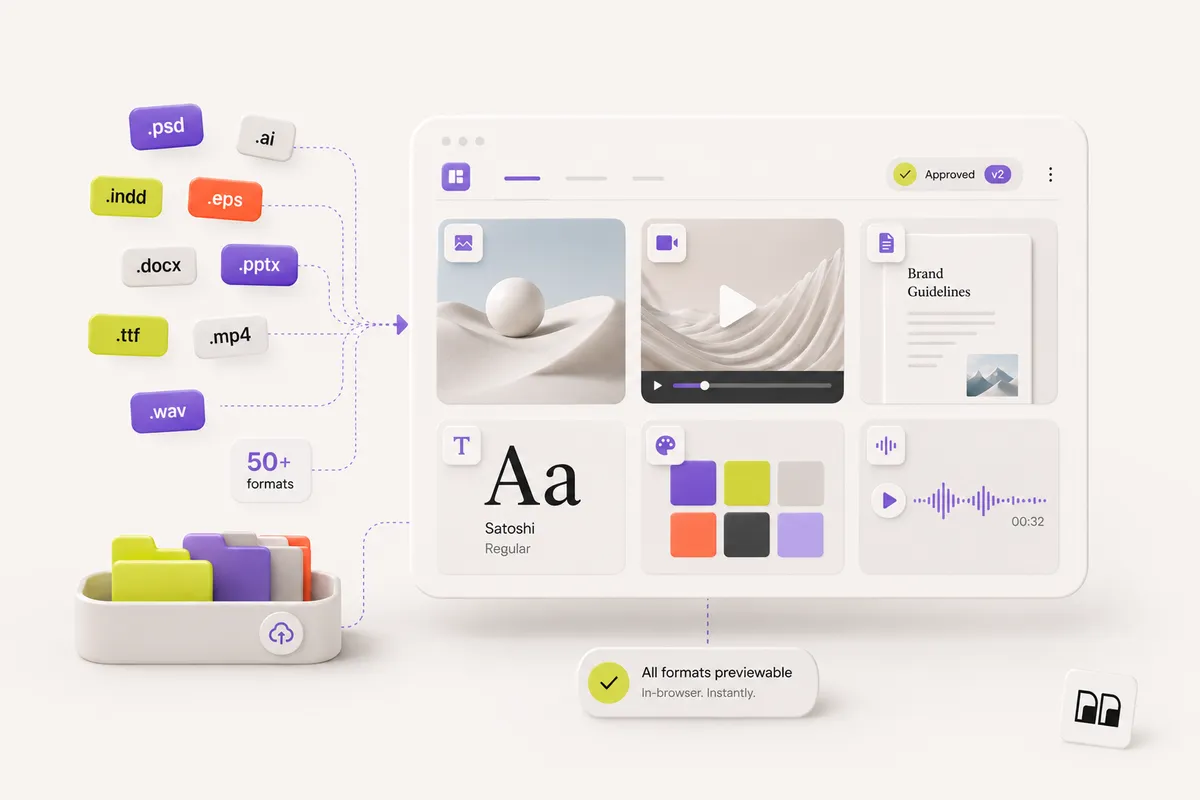
Brand teams produce more than images. Video assets, audio files for podcasts, design source files (PSD, AI, INDD, EPS), document templates (DOCX, PPTX), web fonts, and motion graphics all live somewhere. A BAM platform that previews 50+ formats in the browser saves the time partners and sales reps would spend opening native applications. Brault supports 50+ formats. Brandy supports 30+. Bynder, Brandfolder, and Frontify do not publish a public format count but cover the major creative formats.
How much does brand asset management software cost in 2026?
Brand asset management software splits cleanly into two pricing categories.
Enterprise platforms (hidden pricing, sales-led)
Bynder, Brandfolder, Frontify, and Canto all hide their pricing behind a "contact us" or "get a quote" form. None of the four publish a starting price. The reasons are stated explicitly on their pricing pages. Bynder writes that "every Bynder customer has a custom-made package tailored to their business needs and, therefore, a unique price point." Frontify uses a Monthly Active Users model with six-month averaging. Brandfolder differentiates Premium and Enterprise tiers but lists no costs. Canto lists three packages (Core Essentials, Enhanced Collaboration, Advanced) without prices, and its one public number is a $25,000 per-year listing on AWS Marketplace.
Buyer data fills in the numbers: Vendr's February 2026 reports put Brandfolder at about $500 a month on Basic with a $24,999 median contract, and Bynder at $20,000 to $40,000 a year for a small deployment with a $39,270 median, plus implementation fees of $2,000 to $10,000 or more. Annual contracts are standard. The buyer is procurement, not the brand manager. The onboarding is a project of one to three months. The audience is large marketing departments with the budget and the IT support to absorb that. The plan-by-plan detail is in the Brandfolder pricing, Bynder pricing and Canto pricing guides.
Modern alternatives (transparent pricing, self-serve)
Modern alternatives publish their tiers and let teams sign up without a sales call. The lineup as of September 2026 (Brault and Brandy verified 2026-09-21, Filecamp 2026-09-14):
| Platform | Free tier | Starting paid | Top self-serve | Annual contract required |
|---|---|---|---|---|
| Brault | $0 (Free) | $4/mo (Lite) | $70/mo (Growth), then Enterprise | No |
| Brandy | $0 (Free Forever) | $5/mo (Pro) | $500/mo (Unlimited), then Enterprise | No |
| Filecamp | None | $29/mo (Basic) | $89/mo (Professional) | No |
The storage anchor matters. Brault's pricing works out to roughly $6 to $14 per TB. Enterprise BAM vendors charge what works out to roughly $1,000 per TB once implementation and contracts are amortized. The difference is not a discount; it is what happens when the same capabilities are delivered without procurement-grade sales motion.
For mid-market companies that have outgrown shared drives but cannot justify a six-figure procurement, the modern-alternative tier is usually the right fit. For Fortune 1000 marketing departments with regulatory exposure, deep system integrations, and existing analyst-driven vendor selection, the enterprise tier still wins on completeness of feature set.
What are the best brand asset management platforms in 2026?
Below is the working lineup as of September 2026, organized by category. Self-serve prices are current per each vendor's pricing page on the verification dates above; enterprise figures are buyer reports.
Modern alternatives (transparent pricing)
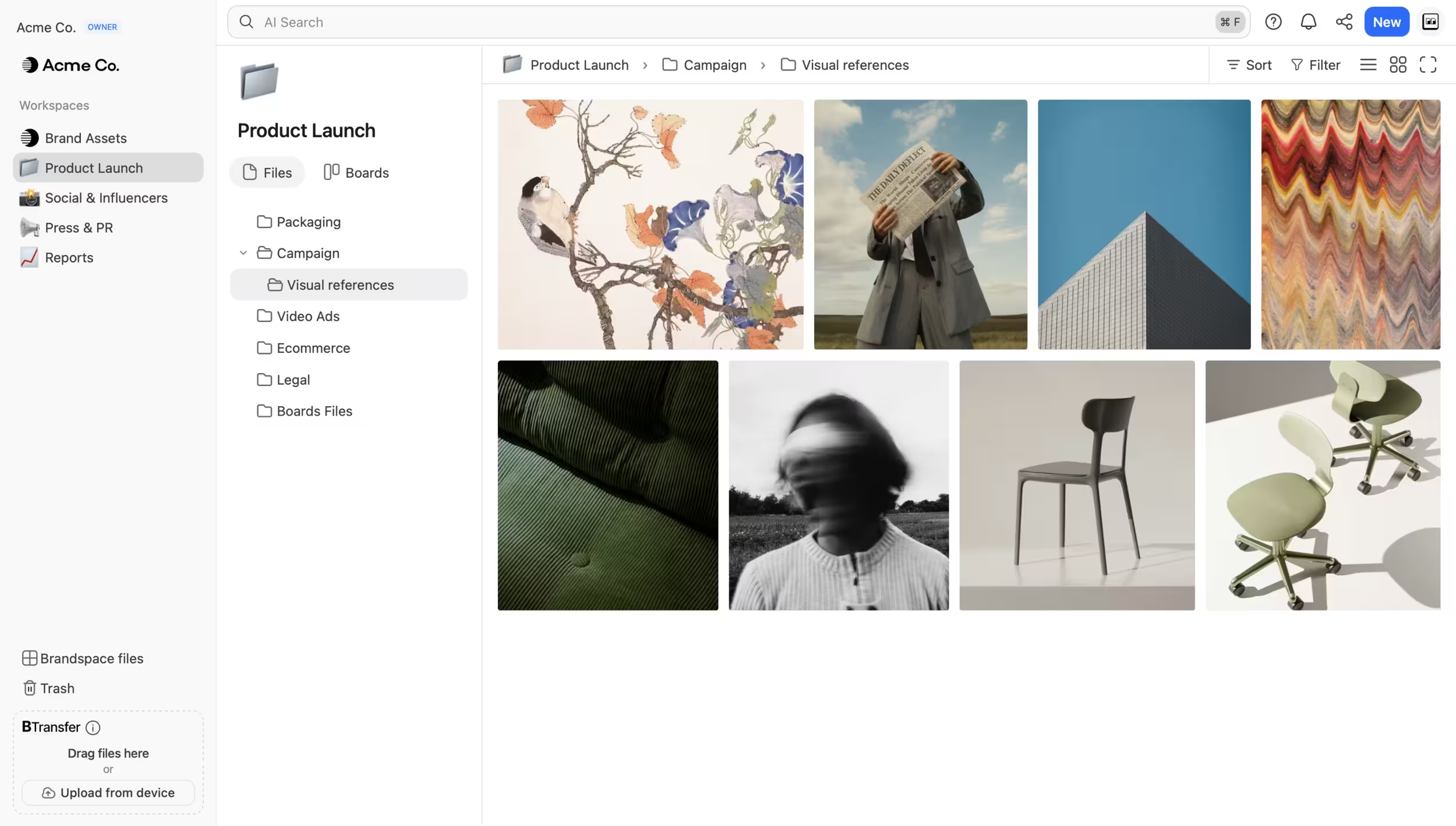
Brault is a creative file management platform that combines AI search, libraries, integrated file transfer, white-label branding, and Boards in a single platform. It supports 50+ file formats, includes white-label and Boards on every plan (Free included), pairs the brand library with built-in distribution through Brault Transfer, and ships native apps for Mac and iPhone. Plans are $0 (Free), $4 (Lite), $12 (Pro), $70 (Growth) on annual billing, and custom Enterprise. Best fit: marketing teams, creative agencies, mid-market companies, and franchises that want BAM features without procurement-grade pricing. Learn how Brault handles brand customization and AI search.
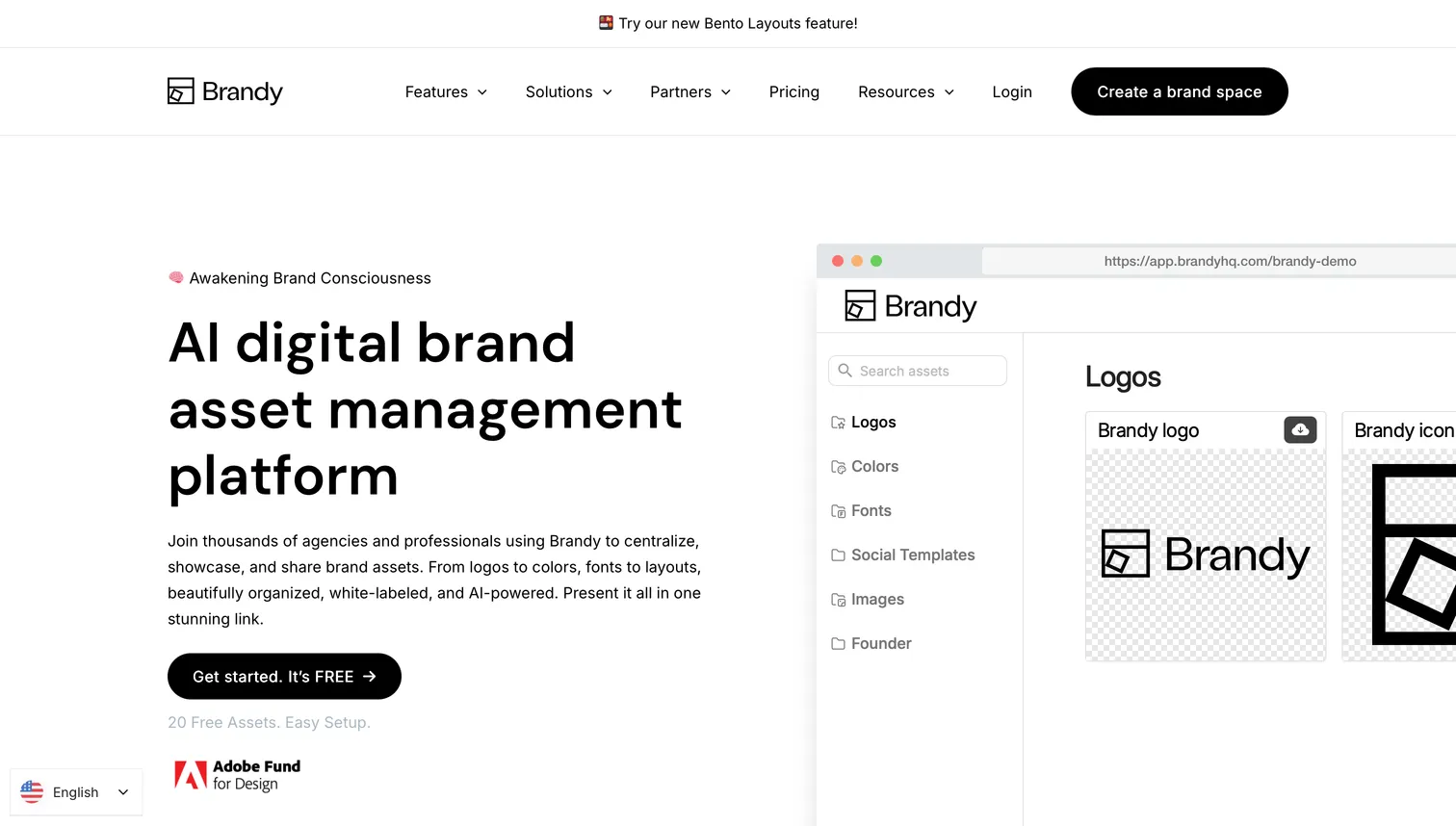
Brandy is a brand-portal-first product focused on brand consciousness, guidelines, and curated brand spaces. It supports 30+ file formats, ships AI search across all tiers, and includes custom URL plus custom branding from its $5/month Pro tier. Plans are $0 (Free Forever), $5 (Pro), $35 (Business), $50 (Agency), $100 (Premium with deep white-label), $500 (Unlimited), and custom Enterprise. Best fit: solo brand managers, small in-house teams, and brand consultancies that lead with portal-style distribution.
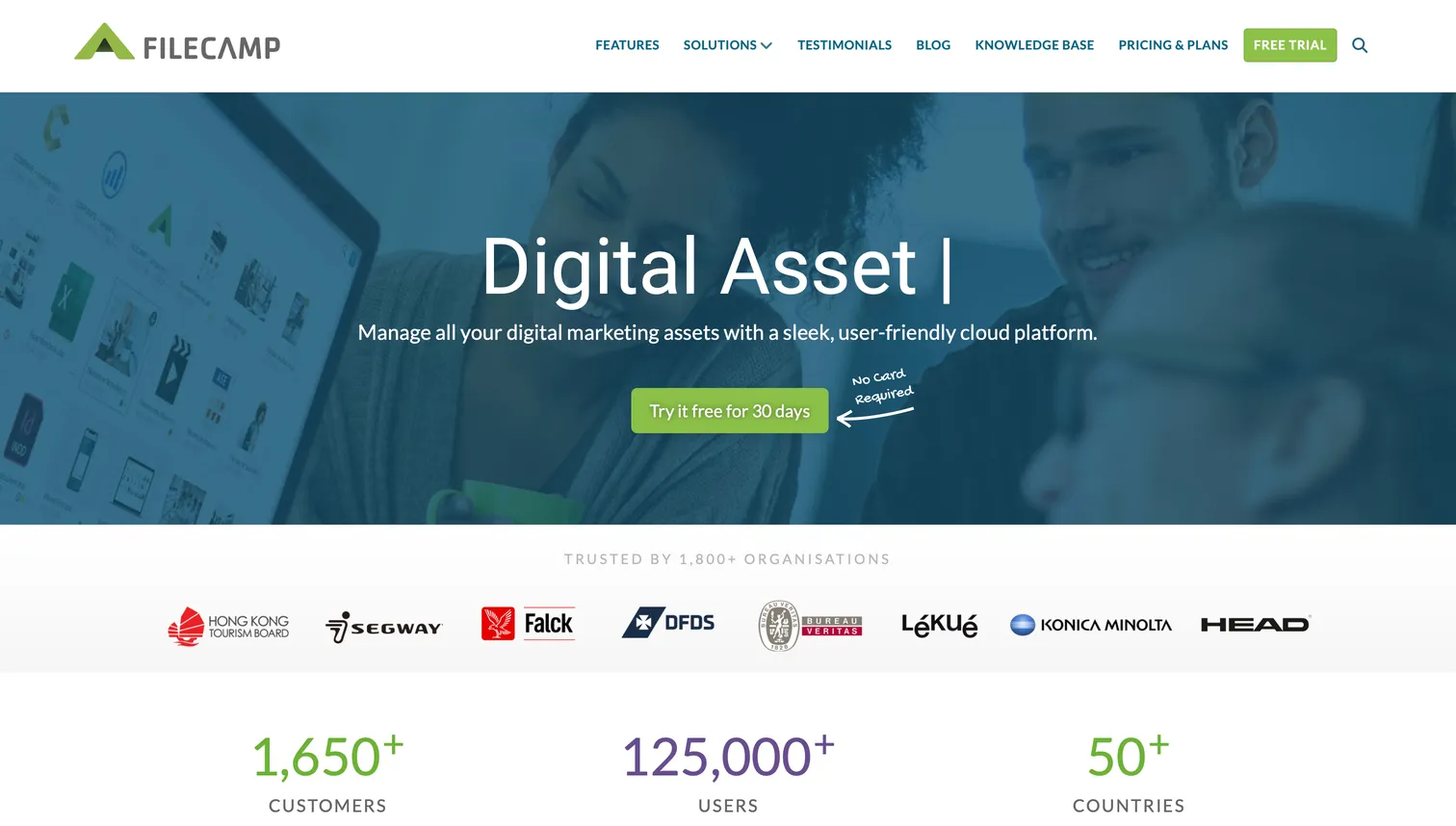
Filecamp is a brand portal and file-sharing platform with a focus on agencies and small in-house teams. It supports a wide range of formats, ships AI auto-tagging from its $59/month Advanced tier, and gates white-label to its $89/month Professional tier. Plans are $29 (Basic), $59 (Advanced), and $89 (Professional). Best fit: agencies and small in-house teams that want a simple branded portal without an enterprise contract.
Enterprise leaders (sales-led pricing)
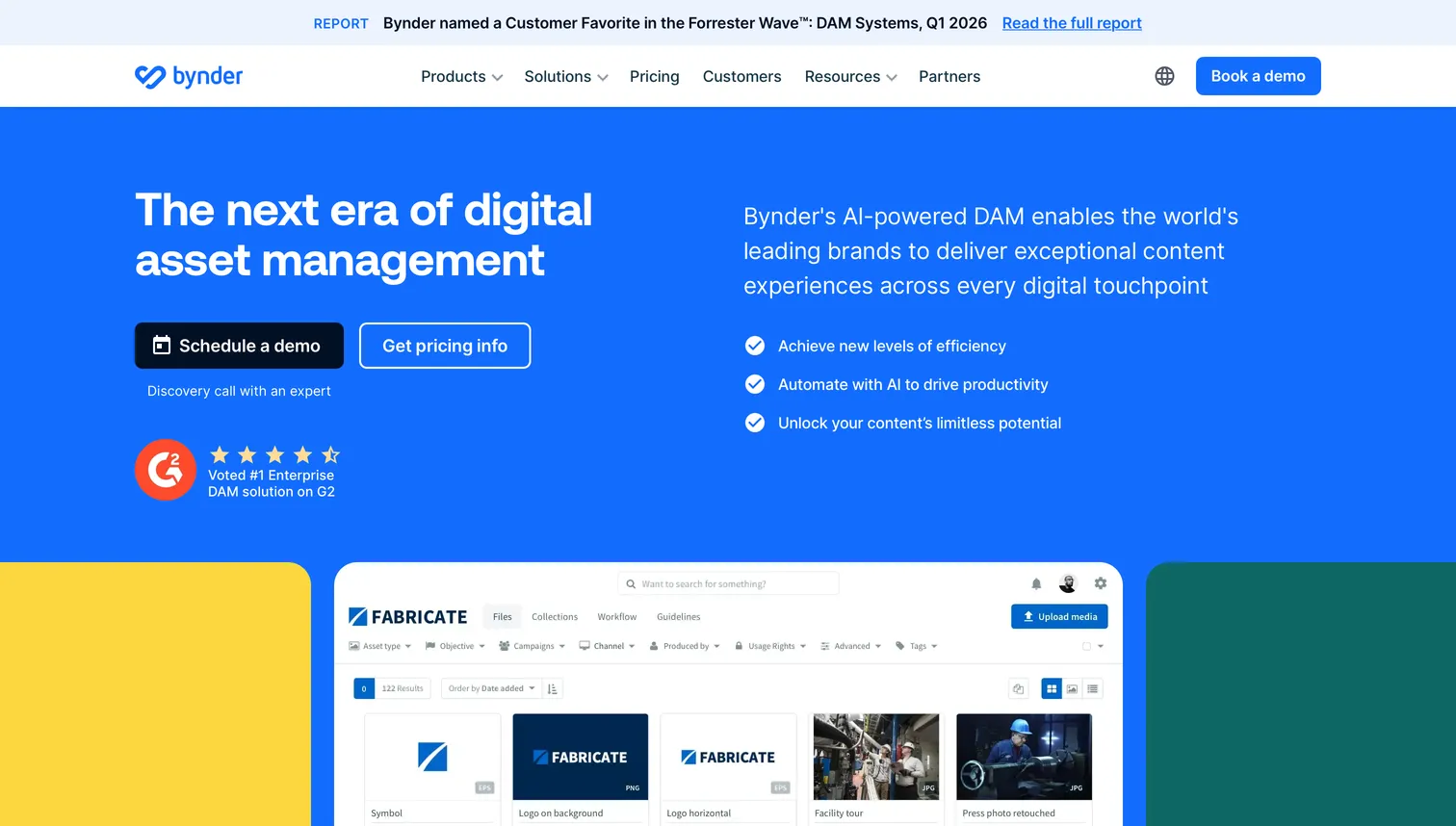
Bynder is a global enterprise DAM with strong AI capabilities (search by image, text, and speech), 160+ integrations, and a deep modular product line including Asset Workflow, Content Workflow, Studio, and Analytics. SSO and custom URL are included on every package. Pricing is custom; buyers report $20,000 to $40,000 a year for small deployments (Bynder pricing). Best fit: global marketing departments and Fortune 1000 brands with full procurement and IT involvement.
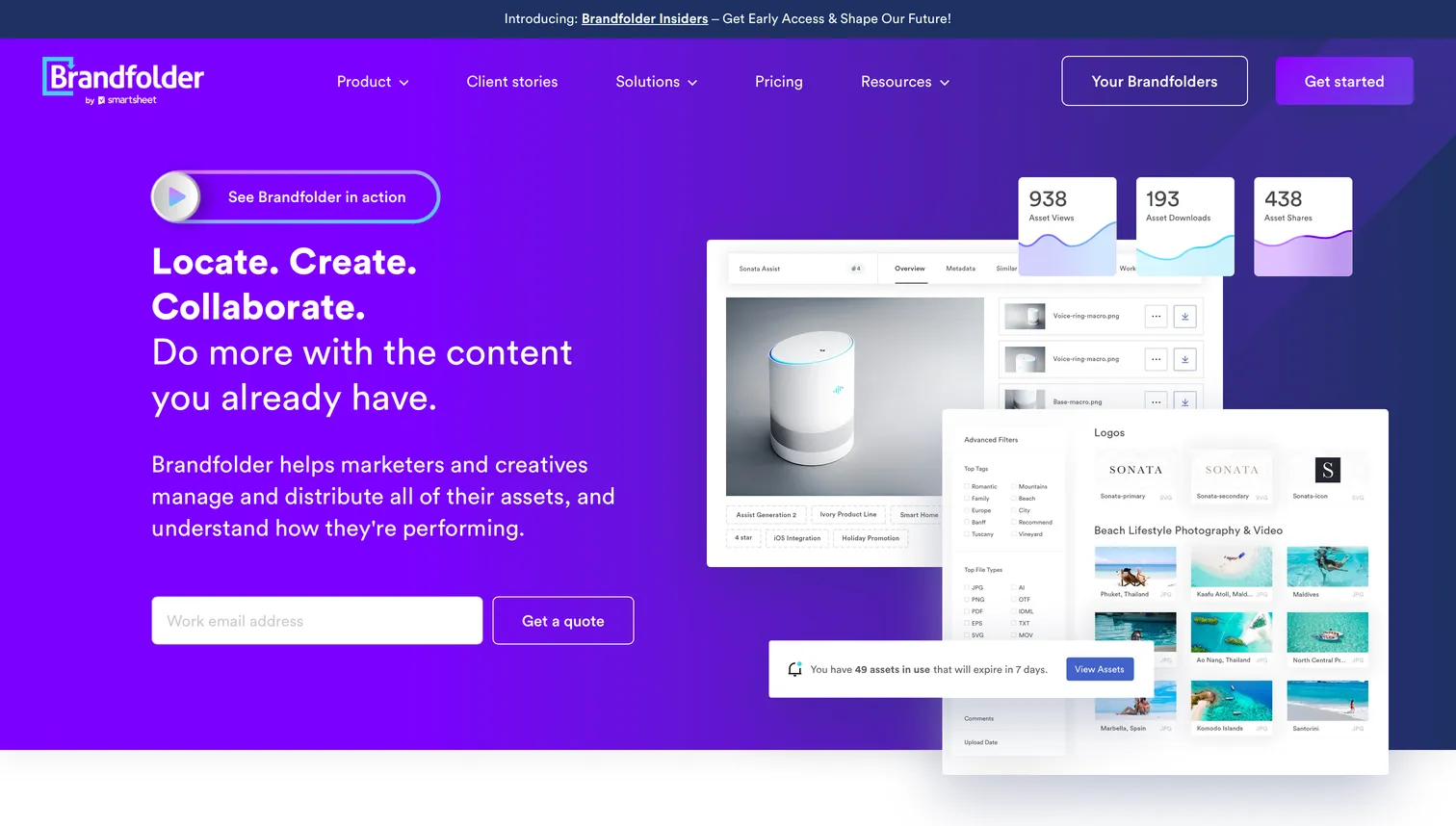
Brandfolder (Smartsheet) is an enterprise BAM with Basic, Premium and Enterprise tiers. Premium ships asset analytics, OCR document intelligence, SSO, and Video AI auto-tagging plus speech-to-text. Enterprise adds custom automation, granular permissions, multi-team controls, BI integration, and Vanity URL for branded experience. Pricing is custom; buyers report about $500 a month at entry. The product is reviewed in the Brandfolder review and compared with its closest peer in Bynder vs Brandfolder. Best fit: mid-market and enterprise marketing teams that want a polished BAM with strong analytics.
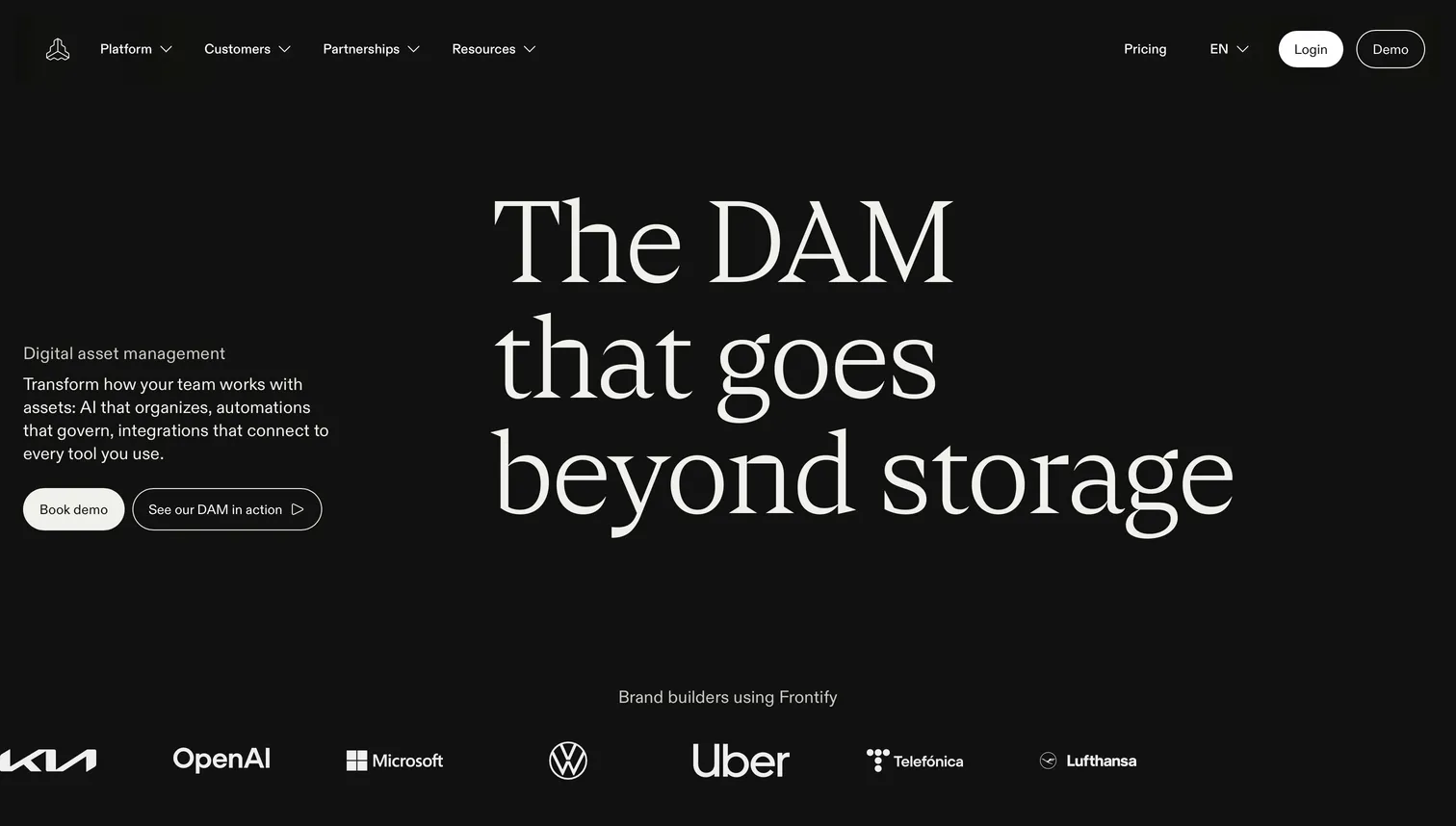
Frontify is an enterprise brand-portal product priced on a Monthly Active Users (MAU) model with six-month averaging. It is positioned around brand guidelines, portals, templates, and AI capabilities. Pricing is custom. Best fit: enterprise brand teams that prioritize portal experience and tolerate the MAU pricing model.
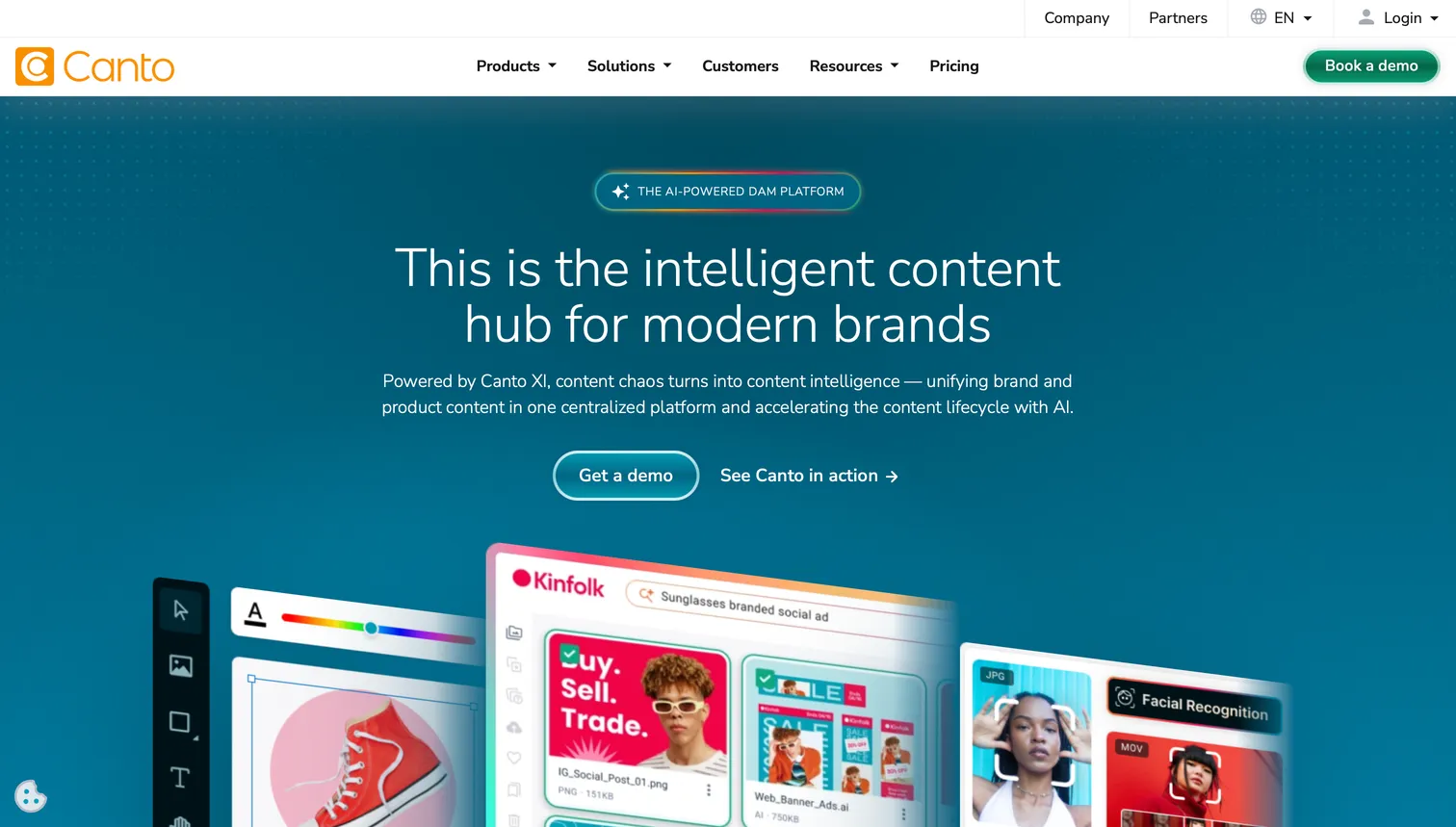
Canto is a long-running DAM with three packages (Core Essentials, Enhanced Collaboration, Advanced). Review and approval, brand portals and AI search live in the middle package. Pricing is custom; the one public listing is $25,000 per year on AWS Marketplace (Canto pricing). Best fit: mid-market marketing teams that want a category-veteran DAM with brand portal capabilities.
Adjacent categories worth knowing
Air.inc, Playbook, and Frame.io cover adjacent slices of the creative ops landscape. Air.inc focuses on creative ops with strong AI and Kanban. Playbook is a visual cloud storage product. Frame.io is video-first review and is owned by Adobe. None of the three lead with brand asset management as their primary positioning, but creative teams considering BAM often shortlist them alongside.
A separate Brault guide compares the broader DAM lineup: best digital asset management software. For a definitional starting point, see Wikipedia's Branded asset management entry.
How do you pick a brand asset management system?
The decision usually collapses to four variables.
Team size and audience. A solo brand manager with 200 assets and three sales reps fits inside Brault Lite ($4/month) or Brandy Free. A 50-person marketing team distributing to 200 partners typically fits Brault Pro or Growth, or Brandy Business or Agency. A 500-person enterprise marketing department with regulatory exposure usually lands on Bynder, Brandfolder, or Frontify.
Budget reality. If the budget is "what can I expense" or "under $200 per month all-in", modern alternatives are the only option. If the budget is "we have a procurement process and a six-figure annual line item for marketing tools", enterprise becomes feasible. The middle ($500 to $2,000 per month) is where the modern alternatives stretch furthest, and where Brault Pro or Growth typically wins on completeness for the price.
Compliance and integrations. Regulated industries (financial services, healthcare, food service with national advertising compliance) often need specific certifications, audit logs, and integration with internal CMS, PIM, or ERP systems. Enterprise BAM platforms ship those out of the box; modern alternatives are catching up but are not always there yet. Brault includes audit logs, SOC-1/2/3 compliance, GDPR compliance, and an Enterprise plan with SSO and dedicated support, which covers most non-Fortune-1000 requirements.
Format diversity and creative output. A brand library that is 90 percent images and PDFs is well served by any platform on the list. A library with heavy video, motion graphics, and design source files (PSD, AI, INDD) needs a platform with broad format previews. Brault publishes 50+ format support; Brandy publishes 30+; Bynder, Brandfolder, Frontify, and Canto cover the major formats but do not publish counts.
A working rule for SMB and mid-market teams: start with a free tier of a transparent-pricing platform (Brault Free or Brandy Free Forever), upload the brand library, set up the access roles, and run for a quarter. If the team grows past the tier, the upgrade is a click. If the team needs enterprise integrations the platform does not yet ship, the migration to an enterprise vendor at that point will be cleaner than going there from a shared-drive starting state.
Frequently asked questions
(See the FAQ entries above; rendered automatically from frontmatter.)
Key takeaways
- Brand asset management governs only the assets that define the brand, which is a curated subset of the broader digital asset management library. Most modern platforms cover both.
- Enterprise BAM platforms (Bynder, Brandfolder, Frontify, Canto) hide pricing behind sales calls; buyers report about $500 a month at entry, median contracts of $25,000 to $39,000 a year, and implementation fees of $2,000 to $10,000 or more.
- Modern alternatives (Brault, Brandy, Filecamp) publish transparent pricing starting at $0 to $29 per month with no implementation fee and no annual contract requirement.
- The storage anchor is roughly $6 to $14 per TB on modern platforms versus roughly $1,000 per TB on traditional enterprise DAMs.
- The six features that matter are a centralized library with built-in guidelines, AI search across file content, white-label distribution, granular permissions and approval workflows, built-in file transfer, and broad file format support.
- The decision usually collapses to team size, budget, compliance requirements, and format diversity. Solo brand managers and SMB teams typically start with a free tier of a transparent-pricing platform; Fortune 1000 marketing departments typically land on enterprise.
- Brault combines BAM features with creative file management, AI search across 50+ formats, white-label on every plan, and built-in Brault Transfer, at $0 to $70 per month on annual billing. If the brand asset management workflow you need does not match what Brault ships today, we want to hear about it.
Related reading
- Brand asset management for franchises: 2026 buyer's guide
- What is a DAM? Costs, features, and modern alternatives
- Best digital asset management software in 2026
- What is creative asset management?
Get started for free at brault.app/register, or book a demo if you want to walk through the brand library setup with the team.